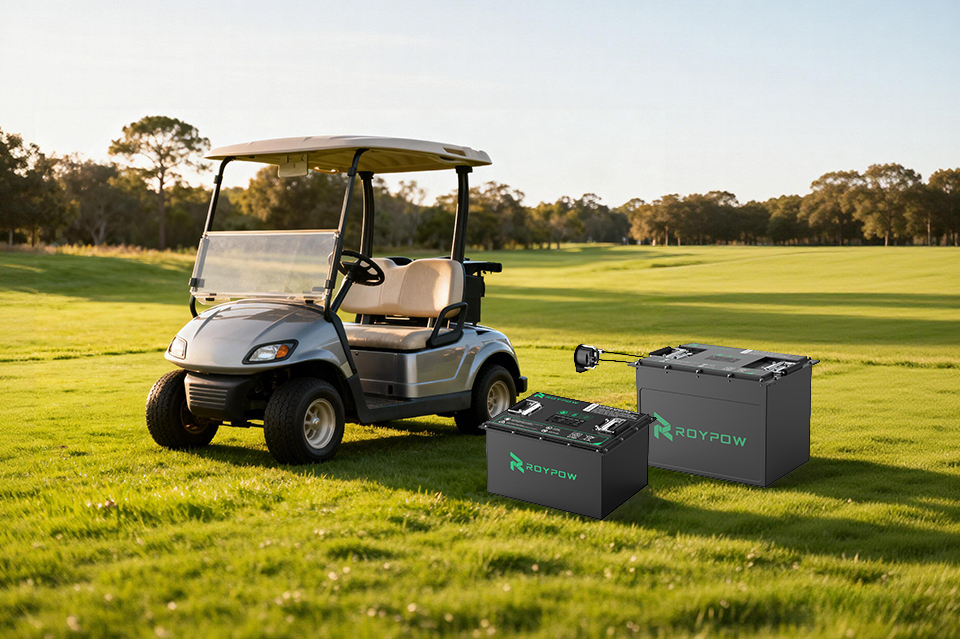
Fast Answer for Yamaha Drive2 Lithium Conversion

The best practical battery upgrade for most electric Yamaha Drive2 golf carts is a 48V LiFePO4 lithium battery system designed for golf cart traction use, sized for your range target, and verified for regenerative braking compatibility. A well-matched lithium conversion can reduce vehicle weight, improve voltage stability, extend usable driving range, shorten charging time, remove routine water maintenance, and lower long-term ownership cost compared with flooded lead-acid batteries.
For the global world market, the common recommendation is a 48V lithium golf cart battery pack with an integrated battery management system, suitable discharge current for hill climbing and passenger load, a compatible charger, and clear installation documentation. Owners in golf communities, resorts, campuses, ports, factories, farms, and private estates from Florida and California to Dubai, Singapore, Rotterdam, Sydney, Cape Town, São Paulo, and Yokohama are increasingly converting Drive2 carts because the platform is modern, efficient, and relatively lithium-friendly.
However, the conversion should not be treated as a simple “any 48V battery will work” project. The Yamaha Drive2 electric platform may use controller logic, regenerative braking behavior, and accessories that require careful matching. The battery must be able to accept regenerative current, handle peak motor demand, communicate status clearly, and remain protected against over-current, over-temperature, over-charge, and under-voltage conditions. In practical terms, the correct conversion includes the battery, mounting solution, cables, charger, state-of-charge display, DC-DC converter if needed, and a post-installation test drive.
If you want the short buying direction, choose a reputable 48V LiFePO4 pack built for golf carts, not a generic solar storage battery. For owners comparing products, the 48V Golf Cart Batteries category is the most relevant starting point for Yamaha Drive2 conversions. For mixed fleets that include older 36V carts or high-voltage performance carts, it also helps to compare 36V Golf Cart Batteries and 72V Golf Cart Batteries so fleet managers can standardize training, chargers, and service procedures.
| Question | Short Answer | Practical Note |
|---|---|---|
| Can a Yamaha Drive2 use lithium? | Yes, with a compatible 48V LiFePO4 system. | Confirm model year, controller type, charger, and regen behavior before installation. |
| Is 48V the usual Drive2 voltage? | Yes, most electric Drive2 models use a 48V battery system. | Do not install a 36V or 72V pack unless the whole vehicle system is engineered for it. |
| Does lithium increase speed? | It may improve consistency more than top speed. | Stable voltage helps maintain performance under load, but controller settings still matter. |
| How much capacity is enough? | Many users choose 100Ah to 160Ah depending on range. | Resorts, hilly courses, and utility users often benefit from larger capacity. |
| Do I need a new charger? | Usually yes. | A lithium charging profile protects the battery and supports full performance. |
| What is the main risk? | Regenerative braking incompatibility. | The BMS must accept regen current safely without nuisance shutdowns. |
| Is the conversion worth it? | Often yes over a 10-year period. | Lower maintenance, longer cycle life, and better uptime can offset higher upfront cost. |
This quick table summarizes the decision path. The rest of this guide explains how the Yamaha Drive2 battery system works, how to choose the right lithium pack, what the 2026 battery market is changing, and how to calculate real total ownership cost for private owners and commercial fleets.
How the Yamaha Drive2 Battery System Works

The Yamaha Drive2, also known in many markets as a modern Yamaha golf car platform, was designed around efficiency, comfort, and serviceability. Electric Drive2 models commonly use a 48V electrical architecture, traditionally supplied by lead-acid batteries arranged in series. Depending on configuration and market, the original battery set may consist of multiple 8V batteries or other combinations that produce a nominal 48V system. When converting to lithium, the goal is to replace that lead-acid bank with a single integrated LiFePO4 pack or a properly engineered modular lithium system that provides equivalent nominal voltage with far better usable energy and voltage stability.
Lead-acid batteries behave very differently from LiFePO4 batteries. A lead-acid bank is heavy, experiences voltage sag under acceleration, loses usable capacity when discharged deeply, and requires regular watering if flooded. It also performs poorly when neglected or left partially discharged. By contrast, a LiFePO4 battery maintains a flatter voltage curve, accepts charging efficiently, and can deliver more consistent current during hill climbs, stop-and-go resort use, and repeated acceleration on courses with elevation changes.
In places such as Orlando resort corridors, Arizona retirement communities, the Algarve in Portugal, Bali hospitality properties, and warehouse districts near Los Angeles, Hamburg, Dubai’s Jebel Ali port, and Singapore’s Jurong trade hub, Drive2 carts are used far beyond casual golf. They move guests, staff, tools, linens, food service supplies, security teams, and maintenance equipment. These applications place repeated deep-cycle demand on the battery. A lithium conversion is attractive because it improves uptime and reduces the service burden of checking water levels, cleaning corrosion, equalizing charges, and rotating aging lead-acid batteries.
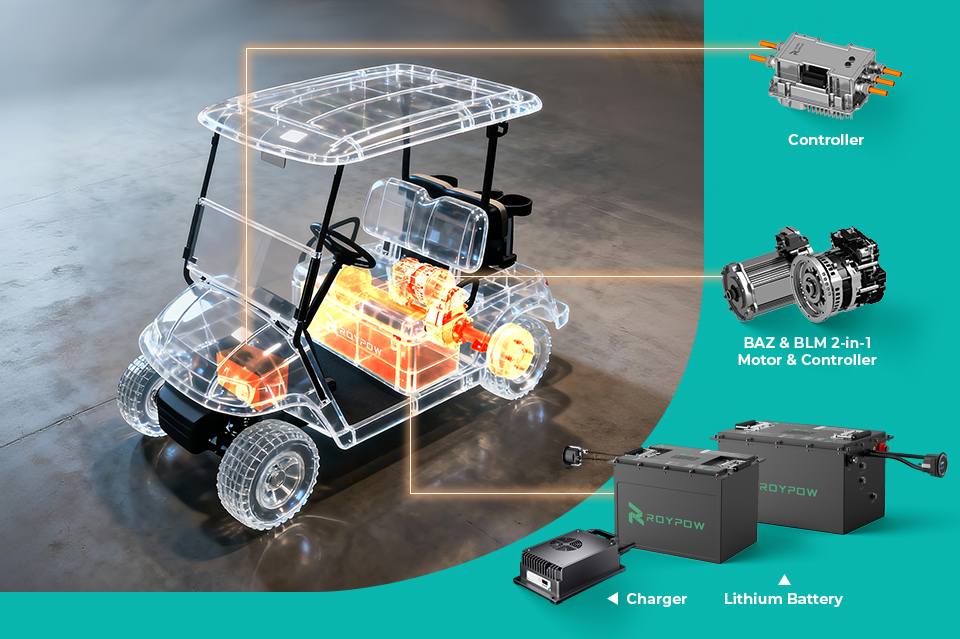
A Drive2 lithium battery system normally includes five important parts. The first is the battery pack itself, usually a 48V LiFePO4 golf cart battery. The second is the BMS, which supervises voltage, current, cell balance, temperature, and protection events. The third is a lithium-compatible charger, ideally matched to the pack voltage and charge profile. The fourth is the vehicle integration hardware, including hold-down brackets, cables, connectors, fuses, and sometimes a mounting tray. The fifth is the user interface, such as a state-of-charge meter or connected display that gives the driver accurate battery information.
The state-of-charge display is more important than many first-time lithium buyers realize. Lead-acid voltage drops gradually, so old-style meters often estimate charge based on voltage. LiFePO4 voltage remains relatively flat for much of the discharge curve, which means a simple voltage meter can mislead the driver. A proper lithium gauge uses BMS data, coulomb counting, or a calibrated method to report remaining capacity more accurately. For fleet managers, accurate reporting prevents unexpected downtime and helps schedule charging windows.
Another key difference is weight. A conventional 48V lead-acid pack may weigh several hundred pounds. A lithium pack with similar or greater usable capacity can be dramatically lighter. This weight reduction affects acceleration, braking feel, tire wear, and turf impact. On golf courses, less weight can reduce soil compaction and make carts easier on soft ground after rain. On resort properties, it can reduce energy use over thousands of stop-start cycles. On industrial campuses, it may improve productivity because the vehicle spends less energy moving its own battery mass.
Still, lighter is not automatically better in every respect. The original cart was designed with lead-acid weight distribution in mind. A quality conversion should secure the new battery properly, maintain stable vehicle balance, and avoid loose mounting that could damage cables or terminals. The installer should also inspect existing cables, solenoids, controller connections, and accessory wiring. A lithium battery can reveal weaknesses in old wiring because it delivers current more consistently and may allow the cart to perform more strongly under load.
Drive2 Production Years and Original Battery Setup

The Yamaha Drive2 platform entered the market as a successor to earlier Yamaha Drive models and has been sold globally in electric and gas versions. Exact model naming can vary by country, distributor, and fleet specification, so owners should verify the vehicle identification plate, controller label, and factory documentation before ordering a conversion kit. The practical point is that modern electric Drive2 carts are most often built around 48V operation, which makes them natural candidates for 48V LiFePO4 replacement batteries.
Factory lead-acid configurations differ by market. Some carts use six 8V batteries in series. Others may use different battery formats to achieve the same system voltage. Fleet carts may have battery hold-down arrangements chosen for rental use, while private carts may have upgraded accessories such as lights, sound systems, heaters, fans, USB outlets, GPS screens, or utility beds. These added loads should be considered when selecting lithium capacity and DC-DC conversion equipment.
Owners often ask whether model year alone determines compatibility. It does not. Model year is useful, but battery selection depends on the complete electrical system. Two carts from the same year can differ if one was sold to a golf course fleet in Scotland, another to a gated community in Texas, and another to a resort in Thailand. Controllers, harnesses, chargers, and accessories may differ. A professional supplier will usually ask for photos of the battery bay, controller label, charger plug, and current battery arrangement before confirming the right solution.
| Drive2 Detail to Check | Why It Matters | What to Record Before Buying |
|---|---|---|
| Model year | Helps identify platform generation and wiring expectations. | Year, serial number, and local market version. |
| Battery arrangement | Confirms the original voltage and space available. | Number of batteries, voltage per battery, tray dimensions. |
| Controller label | Shows current limits and possible regenerative behavior. | Controller brand, model, voltage rating, amperage rating. |
| Charger type | Lead-acid chargers are not ideal for lithium charging. | Charger output voltage, plug style, onboard or portable design. |
| Accessory load | Lights and electronics may require a DC-DC converter. | List of lights, speakers, fans, GPS, USB, pumps, or tools. |
| Terrain | Hills and rough roads increase peak current demand. | Flat course, hilly course, resort roads, industrial routes. |
| Daily mileage | Determines required amp-hour capacity. | Average miles or hours per day and maximum peak day demand. |
| Charging window | Influences charger size and operational planning. | Overnight charging, opportunity charging, multiple shifts. |
This checklist is especially valuable for global fleets. A resort in Cancún, a university campus in Melbourne, and a logistics facility near Rotterdam may all operate Yamaha Drive2 vehicles, but their daily driving patterns are very different. The correct lithium system is chosen by energy demand, operating environment, service support, and vehicle configuration, not just by brand name.
For owners replacing older non-Drive2 carts in the same fleet, voltage standardization should also be reviewed. Older vehicles may need 36V systems, while performance or utility upgrades may call for 72V systems. In those cases, comparing 36 Volt Lithium Golf Cart Batteries, 48V solutions, and 72V Lithium Golf Cart Battery options can help purchasing teams avoid charger confusion and spare-part complexity.
Why Drive2 Is Yamaha’s Most Lithium-Ready Platform
The Drive2 is widely considered one of Yamaha’s most favorable platforms for lithium conversion because it combines modern 48V electric architecture, efficient vehicle design, good battery compartment access, and broad aftermarket knowledge. While every installation still requires verification, the Drive2 generally offers a more straightforward upgrade path than many older carts that may have aged wiring, limited tray space, or less predictable controller behavior.
One reason is the platform’s efficiency. Lithium batteries show their value when the vehicle can convert stable voltage into predictable motion. The Drive2’s modern chassis, motor system, and overall design make it suitable for users who want consistent performance rather than merely a new battery. In real-world use, drivers often notice that acceleration feels more uniform during the discharge cycle. With lead-acid, a cart may feel strong after a full charge but weaker after several holes or several hours of work. With LiFePO4, the cart tends to feel more consistent until the battery approaches its lower state-of-charge limit.
The battery bay layout is another advantage. Many Drive2 conversions can use a single integrated lithium battery that fits in the original battery area with a secure bracket. This reduces wiring complexity compared with replacing multiple lead-acid batteries with several separate lithium modules. Fewer interconnect cables can mean fewer resistance points, fewer corrosion points, and easier inspection. For commercial fleets, a clean battery bay also simplifies technician training.
Drive2 carts are also popular enough worldwide that installers, dealers, and battery suppliers are familiar with common conversion requirements. Local support exists in major golf and tourism regions, from Palm Springs and Phoenix to Marbella, Dubai, Bangkok, Auckland, Johannesburg, and the Caribbean. In port cities and trade hubs such as Long Beach, Antwerp, Busan, and Shanghai, parts logistics are often faster because lithium battery distribution networks continue to expand.
The sustainability argument is becoming stronger as well. Golf courses, hotels, airports, ports, and large campuses are under pressure to reduce fuel use, reduce hazardous maintenance practices, and document cleaner operations. Although lead-acid batteries are recyclable, they still require acid handling, water maintenance, and periodic replacement. A high-quality LiFePO4 battery can deliver a longer service life with less routine intervention. By 2026, procurement policies in many regions are expected to give more weight to lifecycle emissions, battery traceability, recycling programs, and safer chemistries.
For individual owners, the Drive2’s lithium-friendly nature also means better day-to-day convenience. A cart used in a gated community in Florida, a coastal town in Australia, or a holiday villa in Spain may sit unused for periods and then be expected to work immediately. LiFePO4 batteries generally have low self-discharge compared with lead-acid. With correct storage settings and periodic checks, they are easier to manage for seasonal use. This is particularly useful for snowbird owners, rental properties, and vacation resorts with seasonal demand.
Selecting the Proper 48V LiFePO4 Battery for Drive2
Choosing the right 48V LiFePO4 battery for a Yamaha Drive2 requires more than comparing amp-hour numbers. Capacity matters, but so do peak discharge current, continuous discharge current, BMS design, charging profile, temperature rating, enclosure quality, service support, and fitment. A battery with an impressive capacity label but a weak BMS may shut down on hills, during regenerative braking, or under heavy passenger loads. A properly engineered golf cart battery should be designed for traction use, not only for stationary energy storage.
For light private use on flat roads, a smaller-capacity 48V lithium pack may be enough. For golf course rounds, resort work, multi-passenger use, or hilly properties, a larger pack is often the smarter investment. Capacity should be estimated by your longest realistic day, not your average easiest day. A cart that usually drives six miles may occasionally need fifteen miles during events, peak tourist seasons, tournaments, or maintenance emergencies. Planning for the peak day prevents over-discharge stress and driver frustration.
Battery chemistry is also important. LiFePO4 is widely preferred for golf carts because it offers strong thermal stability, long cycle life, and good safety characteristics. Other lithium-ion chemistries can be energy dense, but LiFePO4 is a practical match for motive power applications where durability and safety are more valuable than maximum energy density per kilogram. A well-designed LiFePO4 system includes cell balancing, thermal monitoring, short-circuit protection, and current limits matched to the vehicle.
When comparing brands, look at real specifications. Continuous current tells you how much power the battery can support over time. Peak current tells you whether it can handle acceleration, hill starts, and short bursts. Charge current tells you how quickly it can recharge safely. The IP rating or enclosure design indicates resistance to dust and moisture. Communication options may support Bluetooth, CAN, RS485, or display integration. Warranty terms should be clear and realistic, with local service access where possible.
Charging equipment should be treated as part of the battery purchase. A lithium-compatible Golf Cart Battery Charger uses the right charge voltage and termination behavior for LiFePO4. Many lead-acid chargers use stages designed for flooded or AGM batteries and may not properly complete, balance, or protect a lithium pack. Using the wrong charger can shorten battery life, trigger BMS protection, or leave the pack undercharged.
| User Type | Typical Drive2 Use | Suggested Battery Focus | Buying Advice |
|---|---|---|---|
| Private neighborhood owner | Short daily trips, flat streets, light passenger load. | Moderate capacity and easy charging. | Prioritize reliable BMS, simple display, and local warranty support. |
| Golf course fleet | Multiple rounds, frequent starts, turf conditions. | Cycle life, fast service, and fleet charging. | Choose standardized packs and chargers to reduce maintenance training. |
| Resort or hotel | Guest transport, luggage, housekeeping, long shifts. | Higher capacity and opportunity charging. | Size for peak occupancy seasons, not quiet weekdays. |
| Industrial campus | Tools, technicians, security, stop-and-go routes. | High discharge current and rugged enclosure. | Check accessory loads, road grade, and shift schedules. |
| Hilly community | Steep climbs and regenerative downhill sections. | Peak current and regen-compatible BMS. | Ask supplier for proven Drive2 hill performance data. |
| Seasonal property | Long storage periods and occasional heavy use. | Low self-discharge and storage guidance. | Use a battery with clear sleep mode or storage recommendations. |
| Rental fleet | Unpredictable users and high daily turnover. | Durability, monitoring, and abuse protection. | Install accurate SOC displays and train staff on charging rules. |
This table shows why there is no single perfect capacity for every Drive2. The best battery is the one that matches your route, climate, load, and charging habits. A fleet in Singapore’s humid environment may prioritize sealed enclosures and fast support, while a mountain resort in Colorado or Switzerland may focus on peak current, temperature performance, and regenerative braking behavior on descents.
Product sourcing also matters. Many buyers begin with general searches for Golf Cart Batteries, but the final choice should be narrowed to a Drive2-suitable 48V model. Some online distributors such as Golf Cart Battery suppliers may serve owners who prefer e-commerce purchasing, while commercial fleets often work through regional dealers who can inspect vehicles and support installation.
Important Warning: Regenerative Braking and BMS Matching
Regenerative braking is one of the most critical technical issues in a Yamaha Drive2 lithium conversion. When the cart slows down or travels downhill, the motor and controller may return electrical energy toward the battery. A lead-acid battery can often absorb this current in a forgiving way, although not always efficiently. A lithium battery depends on its BMS to decide whether current can be accepted. If the BMS is not designed to handle regenerative current properly, the system may shut down, trigger a fault, or create an unsafe condition.
The problem becomes more noticeable when the battery is near full charge. If a lithium pack is already full and the cart attempts to send regenerative current back into it while descending a hill, the BMS must manage the event. Quality golf cart lithium batteries are engineered with this use case in mind. Generic lithium packs may not be. This is why a Drive2 conversion should use a battery specifically rated for golf cart traction and regenerative braking applications.
In hilly cities and resort regions such as San Francisco, Cape Town, Queenstown, Madeira, Hong Kong’s island roads, or mountain golf communities in the Alps, regen behavior deserves special attention. A cart that works on a flat test route may behave differently on a steep downhill section with a full battery and two passengers. The installer should test the cart in real operating conditions and confirm that braking, acceleration, and restart behavior remain normal.
The BMS must also handle discharge current. A Yamaha Drive2 carrying four passengers up a grade can demand high current for short periods. If the BMS peak current rating is too low, it may cut power just when the driver needs torque. That type of nuisance shutdown is more than inconvenient; it can create a safety issue on slopes or road crossings. A reputable supplier should publish continuous and peak current ratings and explain whether they are suitable for the Drive2 controller and expected use.
Temperature adds another layer. LiFePO4 batteries should not be charged below certain temperatures unless they include heating or low-temperature charge protection. In cold regions such as Canada, northern Europe, Korea, Japan, or high-altitude resorts, winter storage and charging procedures are important. In hot regions such as the Gulf states, inland Australia, Arizona, or parts of India, thermal management and enclosure quality matter. The BMS should protect the battery, but good product selection and user training prevent unnecessary protection events.
| BMS Feature | Why It Matters for Drive2 | What a Buyer Should Ask |
|---|---|---|
| Regenerative charge acceptance | Allows safe downhill and deceleration energy return. | Is the pack tested with Yamaha Drive2 regen behavior? |
| Continuous discharge rating | Supports normal driving without overheating or shutdown. | What current can the battery supply continuously? |
| Peak discharge rating | Handles hill starts, acceleration, and heavy loads. | How long can peak current be supplied? |
| Low-temperature charge protection | Prevents lithium plating and cell damage in cold conditions. | Does charging stop automatically when cells are too cold? |
| Cell balancing | Maintains long-term capacity and pack health. | Is balancing passive or active, and when does it occur? |
| Communication interface | Improves state-of-charge accuracy and diagnostics. | Does it support a display, app, CAN, or service tool? |
| Over-voltage protection | Important when charger or regen pushes voltage upward. | How does the BMS respond to full-charge regen events? |
| Service logging | Helps diagnose fleet problems and warranty questions. | Can technicians read fault history or operating data? |
Regenerative braking compatibility is one of the clearest differences between a professional golf cart lithium battery and a generic low-cost battery. A lower purchase price can become expensive if the cart shuts down, cannot handle hills, damages accessories, or requires repeated troubleshooting. For commercial operations, downtime can be more costly than the battery itself.
Drive2 Lithium Conversion Procedure, Step by Step
A Yamaha Drive2 lithium conversion should be completed methodically. Skilled owners may perform the work themselves if local regulations and warranty conditions allow it, but many users prefer a trained dealer or technician. High-current battery systems can be dangerous if installed incorrectly. Always follow the battery supplier’s instructions, use insulated tools, remove jewelry, and observe correct polarity and torque specifications.
Step one is documentation. Photograph the existing battery bay before removing anything. Record cable routing, charger connections, hold-downs, accessory wires, and the main positive and negative connections. Label wires clearly. This matters because old carts may have accessories connected directly to battery posts rather than through a proper converter or fuse block.
Step two is safety isolation. Turn the key off, place the tow/run switch in the correct service position if applicable, disconnect the charger, and verify the vehicle is not energized. Remove the main negative connection first and secure cables so they cannot spring back to terminals. Use appropriate lifting methods for lead-acid batteries; they are heavy and contain acid. Dispose of them through authorized recycling channels. In major cities and ports, battery recycling is usually available through automotive parts stores, waste centers, or industrial battery recyclers.
Step three is inspection and cleaning. Once the lead-acid batteries are removed, inspect the tray for corrosion, cracks, acid damage, or loose hardware. Clean and neutralize residue according to safe procedures. Check cable condition. Replace corroded, stiff, undersized, or heat-damaged cables. Lithium batteries are cleaner than flooded batteries, so this is the best time to restore the battery bay.
Step four is test fitting. Place the lithium pack or mounting tray in the compartment without connecting power. Confirm clearance, lid closure, cable reach, ventilation space if required, and access to service points. The battery must be secured against vibration and movement. A loose pack can damage terminals and create dangerous stress on cables.
Step five is wiring. Connect the main positive and negative cables according to the supplier’s diagram. Install the recommended fuse or breaker if provided or required. Route cables away from sharp edges, moving parts, and pinch points. If the cart has 12V accessories, install or verify a suitable DC-DC converter rather than tapping part of a battery bank. One advantage of a single lithium pack is eliminating uneven accessory drain that previously harmed lead-acid banks.
Step six is charger installation. Replace the old lead-acid charger with a lithium-compatible charger or reprogram only if the manufacturer explicitly supports that option. Confirm the plug style and charging location. Commercial fleets should label chargers clearly to prevent staff from using the wrong equipment. If multiple carts operate in one facility, color coding and charging bay signage are helpful.
Step seven is state-of-charge display setup. Install the display where the driver can see it without distraction. Calibrate it if required. Explain to users that lithium charge behavior differs from lead-acid. A cart may show stable voltage for a long period and then decline more quickly near the end; the accurate SOC display should guide charging decisions.
Step eight is commissioning. Before driving, verify voltage, polarity, secure mounting, cable torque, charger function, display communication, and accessory operation. Perform a low-speed test in a safe area. Then test acceleration, braking, reverse, lights, and charging. If the cart operates in hilly terrain, test a controlled slope under supervision. Watch for BMS warnings, controller faults, or unexpected shutdowns.
Step nine is user training. Drivers should know how to read the display, when to charge, how to store the cart, and what fault indicators mean. Fleet staff should know that lithium batteries do not need watering and should not be equalized with lead-acid procedures. Maintenance shifts from water and corrosion work to inspection, cleaning, software or display checks, charger verification, and cable torque review.
Step ten is follow-up. After the first week or first several duty cycles, inspect the installation again. Check cable tightness, mounting security, charger performance, and driver feedback. This follow-up is valuable for resorts and campuses where many different people drive the carts. Early correction prevents small issues from becoming fleet-wide problems.
Actual Cost Comparison: 10-Year Ownership View
The upfront cost of a lithium conversion is usually higher than replacing a lead-acid battery set. That is why total cost of ownership is the correct comparison. Over ten years, lead-acid batteries may require multiple replacements, watering labor, terminal cleaning, downtime, charger issues, and performance losses as the pack ages. Lithium batteries cost more at the start but may deliver longer cycle life, less maintenance, faster charging, and better usable capacity.
Actual costs vary by country, taxes, import duties, shipping, local labor, energy prices, and warranty terms. A buyer in Los Angeles may face different installation labor than a buyer in Manila, Dubai, Hamburg, or São Paulo. Island markets such as the Caribbean, Hawaii, Maldives, and Pacific resorts may pay more for freight, making longer battery life especially valuable. In dense trade hubs with strong dealer networks, competitive pricing and faster service can improve the lithium value case.
For private owners, the value often comes from convenience. No watering, less corrosion, lighter weight, and more consistent performance make the cart easier to own. For fleet managers, the value is more measurable. Staff time spent watering hundreds of batteries is expensive. Downtime during tournaments, hotel check-ins, airport transfers, or factory shifts has a real cost. Lithium also supports opportunity charging, which can reduce the number of spare vehicles needed.
| Cost Category Over 10 Years | Lead-Acid Drive2 Battery Path | LiFePO4 Drive2 Conversion Path |
|---|---|---|
| Initial battery purchase | Lower upfront cost. | Higher upfront cost for battery and integration kit. |
| Battery replacements | Often two or more sets depending on care and use. | Often one quality pack can cover the period under suitable use. |
| Maintenance labor | Watering, cleaning, equalization, corrosion control. | Periodic inspection, charger checks, software or display review. |
| Charging efficiency | Lower efficiency and longer charging time. | Higher efficiency and shorter charging windows. |
| Vehicle performance | More voltage sag and declining power as batteries age. | More stable voltage and consistent driving feel. |
| Downtime risk | Increases as batteries age or water is neglected. | Lower if the BMS, charger, and installation are correct. |
| Environmental handling | Acid, corrosion, watering, heavy recycling logistics. | Cleaner daily operation with end-of-life recycling planning. |
| Resale value | Older lead-acid carts may be discounted heavily. | Quality lithium upgrade can improve buyer appeal. |
This ownership comparison does not mean every buyer should automatically choose the largest lithium battery. Overspending on unused capacity is not efficient. The best return comes from accurate sizing. A private owner who drives short neighborhood routes may not need the same capacity as a hotel shuttle cart running from morning to midnight. Conversely, a resort that undersizes batteries may lose the benefits of lithium through frequent deep discharge and operational stress.
The 2026 market trend favors smarter batteries, connected diagnostics, and sustainability reporting. Fleet buyers increasingly ask for battery data, cycle count, fault history, and remote monitoring. Regulations in many regions are moving toward stronger battery transport rules, recycling responsibilities, and product traceability. Buyers should expect more attention to certifications, quality systems, and after-sales documentation. The lowest-price battery without clear service support may become harder to justify as procurement standards rise.
Energy policy is also influencing adoption. Cities and resorts are electrifying grounds equipment, utility vehicles, forklifts, marine equipment, and backup power systems. As solar canopies, microgrids, and energy storage become more common at golf clubs and campuses, lithium-powered carts fit into a broader electrification strategy. A golf club in California, a university in the Netherlands, or a resort in the United Arab Emirates may combine solar energy, stationary storage, and lithium cart fleets to reduce fuel use and improve sustainability reporting.
Our Company and Global Support Capabilities
ROYPOW TECHNOLOGY is dedicated to lithium battery systems and energy storage solutions for global customers. In the golf cart sector, the company focuses on LiFePO4 replacements for lead-acid batteries, including 36V, 48V, and 72V systems. For Yamaha Drive2 owners, the 48V product range is especially relevant because it aligns with the common Drive2 electric architecture and supports users looking for cleaner, longer-lasting, lower-maintenance power.
From a technological capability perspective, ROYPOW maintains in-house research and development across BMS design, battery pack design, system integration, industrial design, inverter design, and software development. This matters for Drive2 conversions because the battery is not simply a box of cells. The BMS must manage discharge, charging, regenerative current, temperature, protection logic, and user communication. A strong engineering base helps produce golf cart batteries that are closer to drop-in-ready solutions rather than generic packs requiring extensive modification.
From a manufacturing capability perspective, ROYPOW operates large-scale production resources supported by advanced MES systems, automated production lines, and recognized quality management practices. The company has manufacturing bases in China and Indonesia and a substantial headquarters facility. It also operates testing resources for cell testing, battery system testing, BMS testing, charger testing, and energy storage testing. For global buyers, manufacturing consistency is important because fleet operators may purchase many batteries over several years and expect uniform fit, behavior, and service documentation.
From a service capability perspective, ROYPOW supports customers through subsidiaries and regional teams in major markets including the United States, Brazil, the United Kingdom, Germany, the Netherlands, South Africa, Iraq, Australia, Japan, and Korea, along with dealer networks serving broader regions. This geographic presence is useful for global world customers who need pre-sales confirmation, installation guidance, warranty assistance, and after-sales support. Whether a buyer is managing carts near Miami, Rotterdam, Durban, Sydney, Osaka, or São Paulo, regional support can reduce uncertainty.
The company’s broader motive power experience also matters. In addition to golf carts, ROYPOW develops lithium systems for forklifts, aerial work platforms, floor cleaning machines, scissor lifts, trolling motors, and other industrial applications. These industries demand reliable deep-cycle power, strong BMS protection, and practical service support. Lessons from industrial motive power can strengthen golf cart battery solutions, especially for Drive2 carts used in resorts, factories, warehouses, campuses, and ports.
ROYPOW also provides complementary products such as chargers, DC-DC converters, intelligent alternators, 48V DC air conditioners, and energy storage systems. For a Drive2 conversion, the charger and accessory power strategy are directly relevant. A properly matched battery and charger combination reduces installation risk and improves long-term battery health. Fleet operators that are electrifying more equipment may also benefit from working with a supplier that understands both motive power and stationary energy storage.
For buyers evaluating options, the best approach is to provide full vehicle information and ask direct questions: Is this battery suitable for Yamaha Drive2? What regenerative braking testing has been done? What charger is recommended? What is the continuous and peak discharge rating? What support exists in my region? What warranty process applies? The answers should be specific, not vague. A quality supplier will welcome these questions because they reduce installation errors and improve customer satisfaction.
Common Questions About Yamaha Drive2 Lithium Batteries
1. What is the best lithium battery for a Yamaha Drive2?
For most electric Yamaha Drive2 carts, the best choice is a 48V LiFePO4 golf cart battery with a BMS rated for traction use and regenerative braking. The right capacity depends on daily mileage, hills, passenger load, accessories, and charging schedule. A 48V battery designed specifically for golf carts is usually safer and more reliable than a generic lithium pack.
2. Can I use my original Yamaha lead-acid charger after converting to lithium?
In most cases, you should use a lithium-compatible charger. Lead-acid chargers use charging behavior designed for flooded, AGM, or gel batteries and may not properly charge or protect a LiFePO4 pack. A matched lithium charger helps ensure correct voltage, charge termination, and battery life.
3. Will lithium make my Drive2 faster?
Lithium may improve acceleration feel and maintain performance more consistently because voltage sag is reduced. However, top speed is still controlled by the motor, controller, gearing, tires, and vehicle programming. The main benefits are usually range consistency, lighter weight, faster charging, and lower maintenance.
4. How much range can I expect after conversion?
Range depends on battery capacity, terrain, tire pressure, passenger weight, driving style, temperature, and accessory use. A flat community route may deliver much more range than a hilly resort route with four passengers. Ask the supplier for realistic range estimates based on your conditions rather than relying only on amp-hour ratings.
5. Is regenerative braking a real concern?
Yes. Regenerative braking is one of the most important compatibility points. The battery’s BMS must safely accept charging current from the motor controller during deceleration or downhill driving, especially when the pack is near full. Always confirm Drive2 compatibility before buying.
6. Do I need a DC-DC converter?
If your cart has 12V accessories such as lights, horn, USB ports, speakers, fans, or GPS units, you usually need a proper DC-DC converter. Do not tap a portion of a lithium pack for 12V loads. A converter provides stable accessory voltage and protects the main battery system.
7. How long does a LiFePO4 golf cart battery last?
A quality LiFePO4 battery can last many years and thousands of cycles when correctly sized, charged, installed, and operated. Life depends on depth of discharge, temperature, current demand, charging habits, and storage care. For many owners, one lithium pack can outlast multiple lead-acid replacements.
8. Can I install the conversion myself?
Technically skilled owners may be able to install a conversion, but professional installation is recommended if you are not experienced with high-current DC systems. Incorrect polarity, poor cable routing, loose terminals, or improper charger use can damage equipment and create safety risks.
9. What maintenance does a lithium Drive2 battery need?
Lithium batteries do not need watering or equalization. Maintenance usually includes keeping the battery clean and dry, checking cables and mounting hardware, verifying charger operation, observing storage guidelines, and monitoring the state-of-charge display or app.
10. Are lithium batteries safe in hot climates?
Quality LiFePO4 batteries are suitable for many hot-climate applications when operated within rated limits. In very hot regions, choose a battery with strong thermal protection, a durable enclosure, and clear temperature specifications. Avoid installing batteries near unnecessary heat sources or ignoring BMS warnings.
11. What should seasonal owners do during storage?
Store the cart according to the battery manufacturer’s guidance, usually at a moderate state of charge in a dry location. Disconnect unnecessary loads if recommended. Check the battery periodically, especially before long storage in very hot or cold climates.
12. How do I choose between 100Ah, 160Ah, and larger capacities?
Choose capacity based on your longest realistic day, not just average use. A 100Ah pack may suit light neighborhood driving, while larger capacities are better for hilly courses, resorts, utility work, or multi-shift operation. More capacity also reduces depth of discharge, which can support longer battery life.
13. Does a lithium conversion improve resale value?
Often it can, especially if the battery is from a recognized brand, professionally installed, and supported by documentation. Buyers appreciate reduced maintenance and newer battery technology. However, poor installation or an unknown battery brand may not add the same value.
14. Where should global buyers source Yamaha Drive2 lithium batteries?
Buy from a supplier that can confirm Drive2 compatibility, provide a matching charger, support warranty service in your region, and answer technical questions about regenerative braking and BMS ratings. Local dealers are valuable for installation, while established global manufacturers can provide product consistency and documentation.
15. What 2026 trends should Drive2 owners watch?
Expect smarter BMS diagnostics, better fleet monitoring, stronger recycling expectations, more sustainability reporting, improved charger integration, and greater emphasis on certified manufacturing. Buyers should prioritize batteries with transparent specifications, service support, and future-ready communication features.